




When Power Forgets Itself
by Wilk WilkinsonOriginally published on Substack. Shared here for broader access.
When Power Forgets Itself
Over the past week, two stories—one out of Minnesota, another out of Portland, Maine—have lodged themselves uncomfortably in my mind.
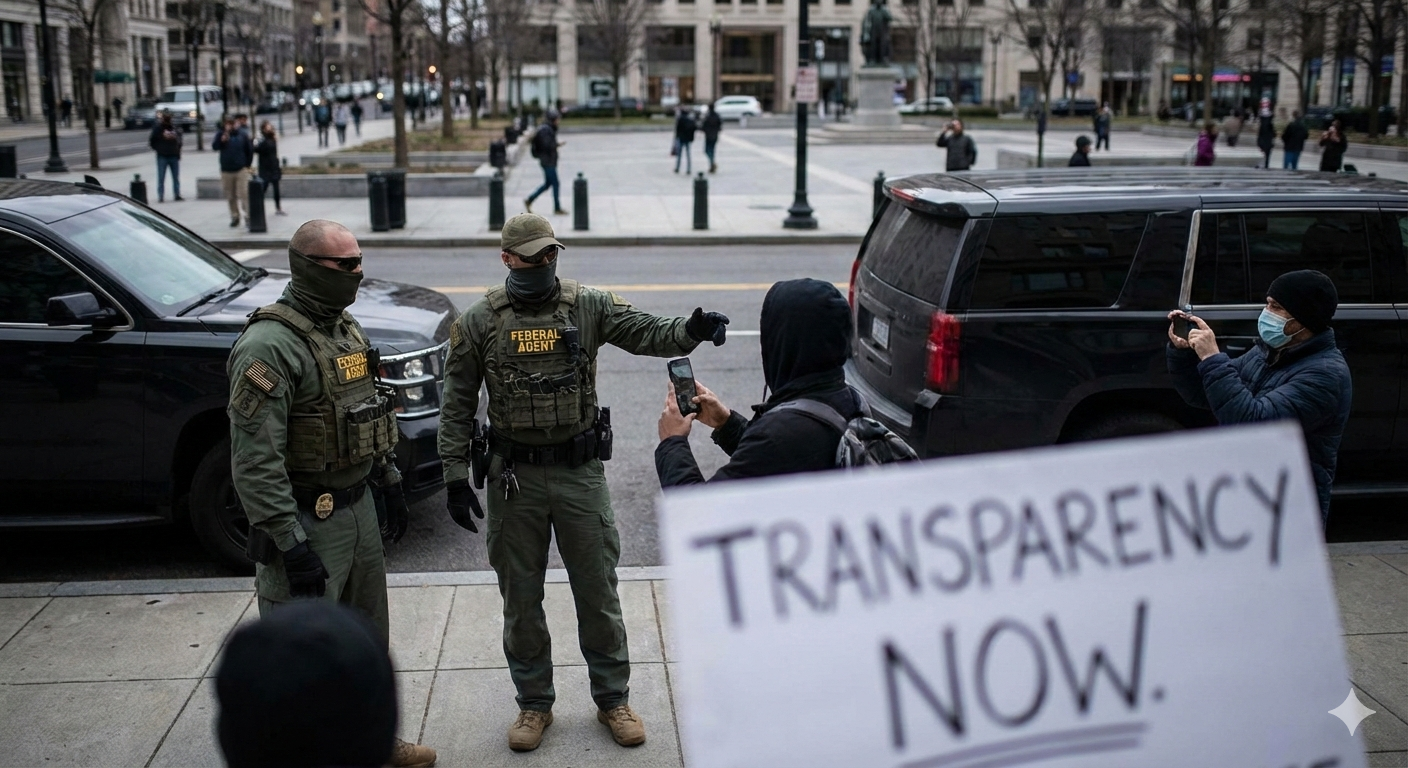
In Minnesota, a U.S. citizen was held down by ICE officers and sprayed in the face with a chemical agent from inches away. In Portland, a federal immigration official reportedly told a civilian observer that she was now being entered into a database of “domestic terrorists” for doing nothing more than watching and recording law enforcement activity in public.
🔗 https://www.rawstory.com/ice-2675009947/
Taken individually, these stories raise serious questions. Taken together, they point to something deeper—and more dangerous.
Not simply abuse of power, but the loss of restraint.
This is the moment when cooler heads must prevail—not because abuses should be excused or ignored, but because history shows us that when power abandons restraint, it eventually turns inward. And it never stays on one side forever.
The right to observe and record public officials performing public duties is not radical. It is not extremist. It is not terrorism. Courts across the country have repeatedly affirmed this as a protected civic act—a modern expression of the public’s “watchdog” role in a constitutional republic. When agents respond to that act not with professionalism, but with intimidation or threats of secret databases, something fundamental has gone sideways.
Masks worn not for safety but for anonymity. Labels applied not for protection but for fear. Power exercised not with confidence, but with menace.
This is not strength. It is insecurity.
And here’s the part that should concern all of us, regardless of where we fall politically: power always changes hands. The tools normalized today will be inherited tomorrow—often by people we trust less, not more. The precedents we excuse when they feel convenient rarely disappear when they become inconvenient.
A society that blurs the line between dissent and danger, between observation and obstruction, between citizenship and suspicion, is a society quietly sawing at its own foundations.
Still, this is not a call for rage.
Rage is easy. Rage is profitable. Rage is the accelerant everyone expects us to throw.
But love—real love for neighbor, for country, for the fragile project of self-government—demands something harder: empathy without naivety, accountability without dehumanization, and restraint even when we are afraid.
That includes empathy for communities fearful of lawlessness and empathy for individuals fearful of unchecked authority. Empathy for officers asked to do difficult jobs and for civilians who deserve dignity, transparency, and due process. These are not mutually exclusive commitments. They are the twin pillars of a free society.
We should insist—calmly, firmly, relentlessly—that power explain itself. That force justify itself. That authority remain accountable to the people it serves.
And we should do so with the humility to remember that the republic does not survive on who wins the moment—but on who preserves the norms.
Love over hate.
Restraint over retaliation.
Humanity over humiliation.
Not because it’s soft—but because it’s how free societies endure.
Author’s note: This essay reflects publicly reported incidents from January 21 and January 23, 2026, and broader constitutional principles. It is written in the spirit of restraint, accountability, and shared humanity.
Originally published on Substack. Shared here for broader access.
Comments & Upvotes